Wick Foundry

Governed audience intelligence, ready for every analysis.

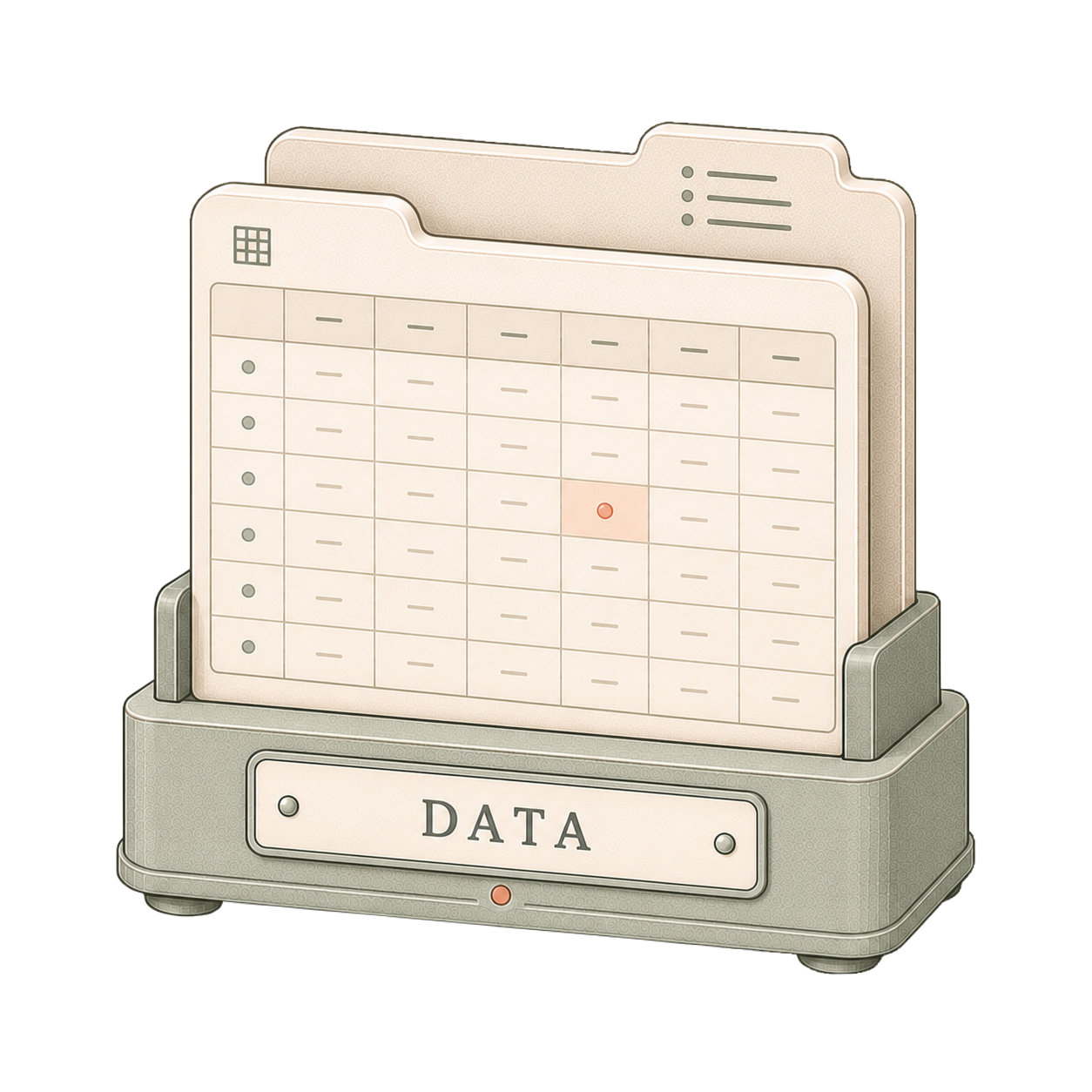
Foundry is where Wick prepares and preserves the audience assets your organization can trust — processed datasets, normalized sources, population models, predictive models, definitions, metadata, and lineage.

The transformation

From raw file to reliable source.

Raw audience data usually arrives with obscure column names, missing context, coded values, and assumptions trapped in a codebook, methodology doc, or someone's head.

Data Foundry keeps the original source intact while making it legible: what the data represents, what each field means, how values should be interpreted, and what caveats travel with the source downstream.

How it gets made

How Data Foundry works.

Step 1

Upload source materials.

Add the dataset and any companion files: codebooks, questionnaires, methodology docs, weighting notes, or field guides.

Step 2

Capture source context.

Dora drafts what it can read, asks for what is missing, and helps confirm how the source should be interpreted.

Step 3

Classify and package.

Wick classifies the variables, profiles the values, validates the source, and packages the result for teams and AI systems.

What you do with it

Where Data Foundry output gets used.

Inside Wick

Build in Agent Workbooks.

Use Data Foundry outputs as the foundation for joins, cuts, composites, models, and deeper audience analysis.

Outside Wick

Package and connect.

Turn prepared source intelligence into Agent Dossiers, then make it available through the Connectivity Gateway to Claude, ChatGPT Enterprise, Copilot, Glean, and custom agents.

Make every source ready before analysis begins.

Request a Demo